
I get lost in the way the Caribbean tells its stories. There is something extraordinary about it.
Sometimes, stories unfold through the beat of music drifting across a courtyard, through the familiar rhythm of a voice and the addictive twang of our people, or through a meal prepared exactly as someone’s grandmother once made it.
But in Nassau, The Bahamas, from October 21 to 25, the stories are arriving on canvas, in the folds of fabric, through the lens of a cameras, and in forms carefully sculpted by gifted hands.
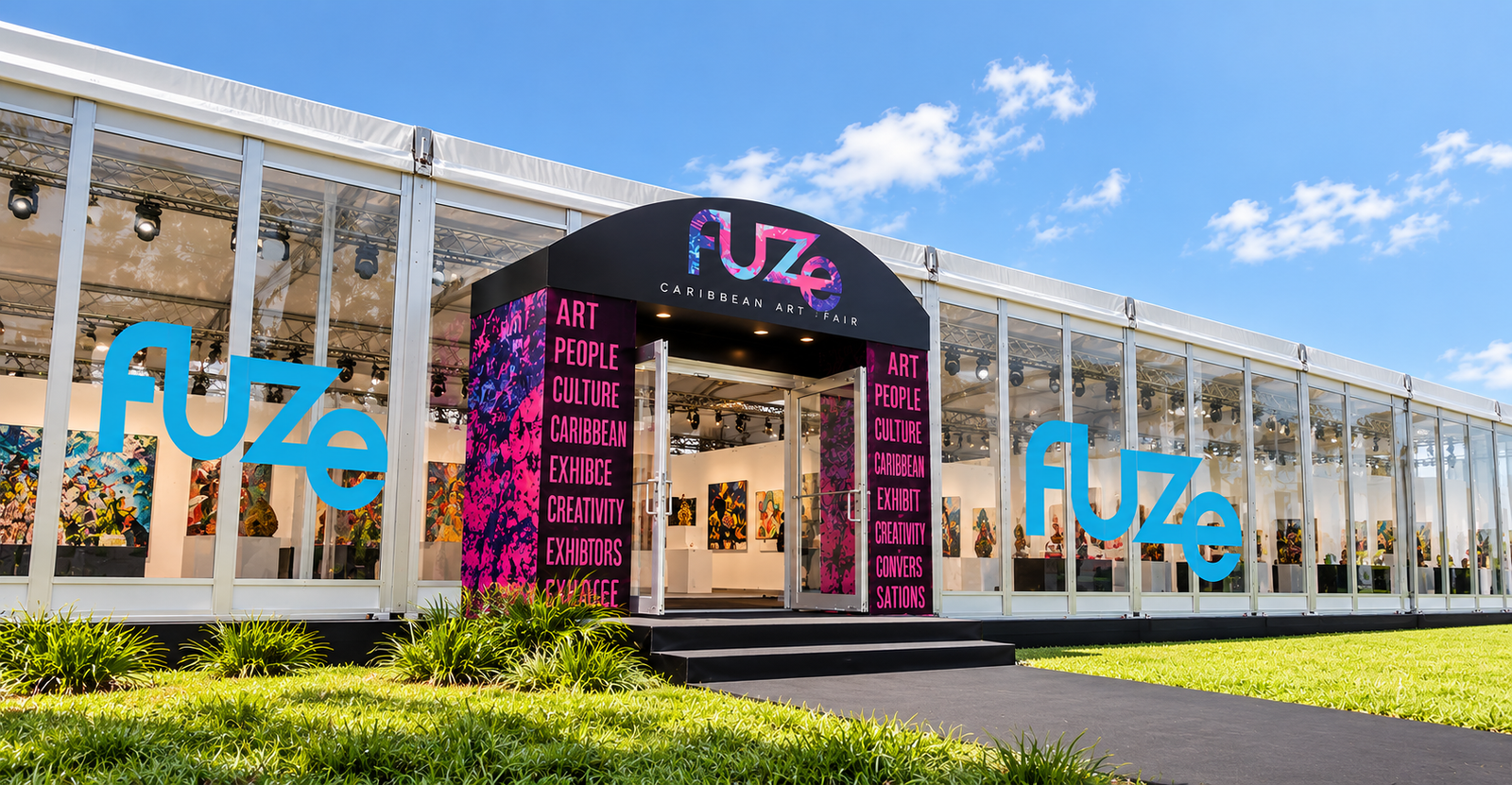
Against the backdrop of an island known for its brilliant blue waters and sunlit architecture, FUZE Caribbean Art Fair has returned to Baha Mar for its fourth edition, bringing together artists, galleries and cultural institutions from across the Caribbean and its diaspora.
The theme this year is Coming Home.
Two simple words, yet in a region shaped by migration, ancestry, movement and reinvention, they carry a depth of emotion that is difficult to put into words.
For some, home might be represented by a particular shade of blue that once coloured the walls of a happy childhood bedroom. For others, it might be found in the arms of a loved one, in a grandmother’s kitchen, or in the familiar sound of rain falling against a galvanised roof.
But for others still, home is more complicated. It can be a place left behind, a place longed for, or somewhere that exists most vividly in the imagination.
Art has a remarkable ability to hold all these meanings at once.
This year’s fair, brings together more than 100 artists and over 20 galleries, museums and cultural institutions representing more than ten Caribbean nations and communities farther afield, including the Americas, Africa and the United Kingdom.
Across the programme, painting, sculpture, photography, installations and multidisciplinary works offer different ways of understanding the Caribbean experience.
But perhaps the most interesting aspect of FUZE is not simply the variety of art being presented. It is the opportunity for these different expressions of Caribbean identity to exist in conversation with one another.
The Caribbean is often spoken about as though it were one place, one culture, one neatly defined experience.
It is anything but.
The region is a collection of distinct histories, languages, landscapes and traditions, connected by geography and similar shared experiences but not entirely the same. Even within a single island, identity can take many forms.
Art allows those differences to be explored rather than flattened.
A portrait can become an examination of belonging, while a familiar domestic object, carefully sculpted, can carry generations of history. Colour and texture can evoke memories that words alone struggle to capture.
And an artwork does not always need to explain itself immediately. Sometimes its value lies in the questions it leaves behind.
Among the presentations associated with this year’s fair is the work of mixed-media artist Lavett Ballard and painter Damilare Jamiu Kanyinsola, brought together by Galerie Myrtis.
Ballard’s practice combines painted imagery, textiles and fragmented visual references, exploring how personal and collective identities are shaped through memory and history.
Kanyinsola’s figurative paintings approach home through a different visual language.With portraits incorporating botanical imagery, patterned textiles and richly layered colour, presenting Black domestic life as a place of dignity, abundance and emotional refuge.
Together, their works offer a particularly moving interpretation of Coming Home.
Home is not presented merely as a building or a location on a map. It becomes something people construct through love, memory, culture and the relationships that sustain them.
Elsewhere, Nassau’s TERN Gallery has announced presentations featuring artists Melissa Alcena, Delton Barrett, April Bey, Blue Curry and Steven Schmid, offering another glimpse of the diversity of contemporary artistic practice connected to The Bahamas.
These are artists whose work belongs within a wider international conversation, even as their perspectives remain connected to the places and experiences that shape them.
That relationship between local identity and global artistic exchange sits at the heart of FUZE.
For generations, Caribbean creativity has travelled far beyond the region. Its influence can be found in international music, fashion, literature, architecture and visual culture. But the institutions and markets through which Caribbean artists gain recognition have not always been located within the Caribbean itself.
International exhibitions and galleries remain important, but there is something meaningful about creating spaces where Caribbean artists can encounter collectors, curators, fellow artists and audiences on Caribbean soil.
FUZE is part of that ambition.
Organised through The Current, Baha Mar’s gallery and art centre, the fair seeks to connect artistic communities while strengthening the infrastructure that allows creative work to circulate, be collected and be appreciated.
The idea is not simply to display beautiful objects. It is to contribute to a regional cultural ecosystem in which artists have opportunities to develop sustainable careers and build relationships across borders.
This is especially important because art is often celebrated for its cultural value while its economic and institutional needs receive considerably less attention.
Behind every exhibition are artists who need studio space, materials, representation, professional networks and opportunities to bring their work before new audiences.
A thriving arts community requires more than talent. It requires people and institutions willing to invest in that talent.
FUZE brings some of those conversations into the same space.
Its programme extends beyond exhibitions to include artist discussions, guided experiences, demonstrations and educational exchanges. The wider festival setting also places visual art alongside food, music and other creative disciplines, reminding audiences that Caribbean culture is vast, complex, stunning and boundless.
It is lived, shared and continually reinterpreted.
This year’s gathering also arrives at an interesting moment for Bahamian art.
The Bahamas has returned to the Venice Biennale after a thirteen-year absence, represented through a presentation involving artists Lavar Munroe and the late John Beadle, curated by Dr Krista Thompson.
The achievement connects Nassau’s artistic community to one of the most recognised international platforms for contemporary art.
It also gives the idea of Coming Home another dimension.
Caribbean artists can participate in the world’s major cultural conversations without leaving their Caribbean identities behind. International recognition need not require distance from the places that shaped them.
In fact, those places may be precisely what makes their contributions distinctive.
The Caribbean has long been presented to the outside world primarily through images of beaches, resorts, festivals and postcard-perfect landscapes.
These are genuine parts of the region’s identity, and often beautiful ones. But they represent only a fraction of its creative and intellectual life.
Beyond the familiar images exists a Caribbean of artists, thinkers, makers and storytellers examining complexities such as migration, race, memory, environmental change, spirituality and the meaning of belonging.
Their work does not always offer easy answers.
Sometimes it challenges the viewer or stirs something deeply personal. It may even reveal a history that has been overlooked or invites us to see an ordinary experience differently.
That, too, is part of the Caribbean story.
And perhaps this is why the theme Coming Home feels especially fitting.
As FUZE continues through the week in Nassau, its larger significance lies in the connections it is working to create: between artists and audiences, between islands and diasporic communities, and between the region’s cultural history and its creative future.
The fair is a reminder that Caribbean art and creativity deserve to be experienced not as an occasional curiosity on the international cultural calendar, but as a living, evolving body of work with its own institutions, ambitions and artistic authority.
Perhaps coming home, in this context, is not about returning to something unchanged.
Perhaps it is about recognising how much the Caribbean has become, how many stories it has yet to tell, and how much room there is for those stories to grow.
And in Nassau, where art from across the region has gathered under one roof, that possibility feels especially worth celebrating.