The air is beginning to come alive.
As another holiday season approaches, people are preparing for the familiar excitement of Christmas. Before long, shops will bustle with shoppers searching for gifts and decorations, cheerful music will fill the air, and it will seem as though society itself is under a spell of joy, peace, and goodwill to all.
But there is something easily missed, if not deliberately remembered.
Not everyone can celebrate this season. For some, the holidays have not been a time of joy for many years.
Pain does not pause for Christmas.
On December 14, 2025, two gunmen opened fire on a gathering celebrating Hanukkah at Bondi Beach in Sydney, Australia. Fifteen innocent people lost their lives, including a ten-year-old girl, while dozens more were injured.
In a matter of moments, futures were erased, homes were hollowed out, and an unbearable quiet replaced ordinary life. For those families, the world moves differently now. Every calendar date carries weight and celebrations arrive with an absence that cannot be replaced or explained away.
Nearly a year later, another holiday season approaches, but for the families affected, the memories of that evening remain.
And they are far from alone.
Across the world, the news continues to carry stories of lives lost to violence. In the Middle East, families have buried children amid devastating conflicts, their grief folded into headlines that move on too quickly. In parts of Africa, the Americas, Europe, and elsewhere, crime, armed conflict, and unrest continue to leave behind names that briefly make the news, then fade, while the people who loved them must carry on indefinitely.
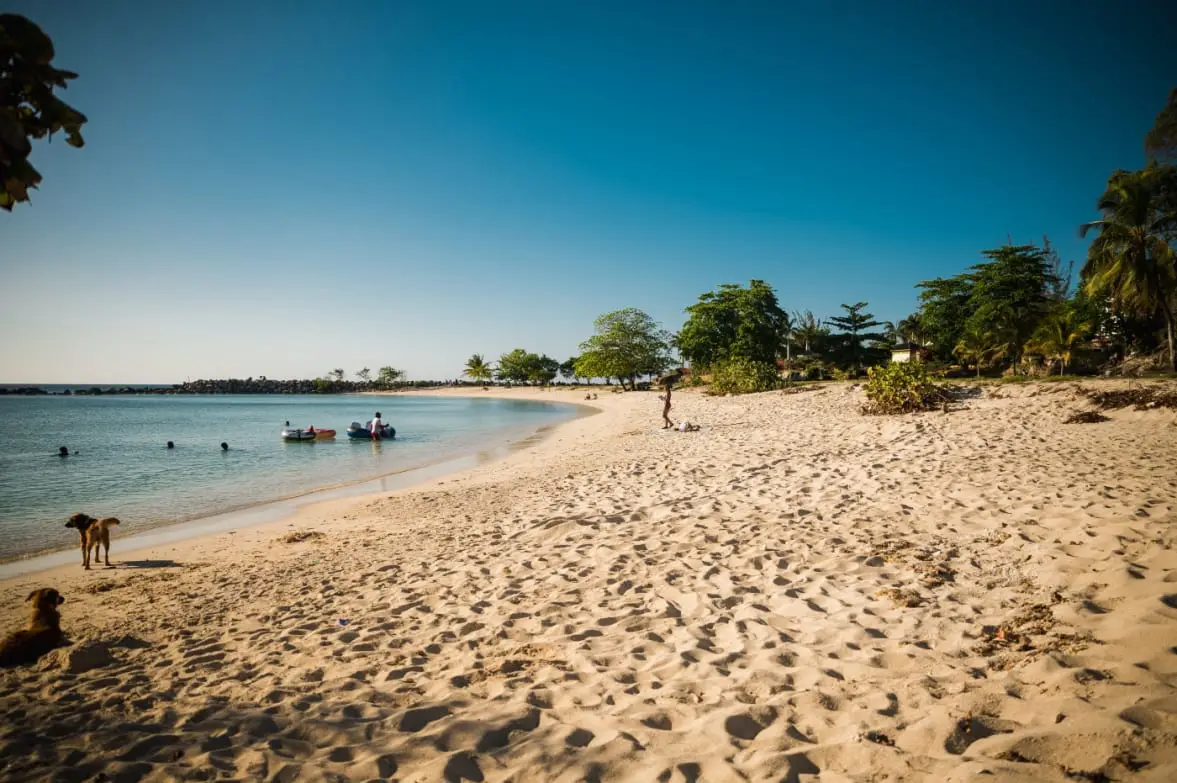
Even in the Caribbean, a region so often associated with ease, beauty, and escape, violent crime has left a painful mark on communities.
Also Read: The Meena House: A Fine Dining Experience in Trinidad
Beneath postcard images and tourist rhythms are families who struggle to find peace because lives have been taken senselessly. Mothers and fathers cry out for justice. Homes are quieter than they should be. There are countless wishes left unspoken: to spend just one more holiday with a son, a sister, a partner, taken too soon, taken violently, many times taken without reason or explanation.
The Caribbean’s struggle with violent crime is real, although the picture is not the same everywhere.
According to the United Nations, Latin America and the Caribbean recorded the world’s highest regional homicide rate in 2024. Yet there have also been encouraging developments. Trinidad and Tobago and Jamaica have both reported reductions in murders during 2026, offering hope that sustained efforts to improve public safety can make a difference.
These improvements deserve recognition, even as we acknowledge the distance still to travel. A declining murder rate is meaningful progress, but for a family grieving the loss of someone they love, the statistics offer little comfort.
Their loss remains immeasurable.
The violence affecting communities around the world does not have a single cause. Organized crime, inequality, political instability, armed conflict, and failures of social protection create different challenges in different places, however, amid these varied circumstances, the human consequences often look painfully familiar.
Loneliness grows in the shadow of unrest.
For those grieving, the holidays can feel cruel because it highlights what has been taken. The expectation to be festive, grateful, and cheerful often clashes with the reality of trauma. Society moves forward quickly; grief does not.
Of course, this is not a call to abandon our celebrations, joy is a good thing, tradition is necessary, and light matters, especially in dark times. But remembrance is important too.
As we gather with family and friends, it is worth pausing to consider those who cannot. To reach out to the friend who has gone quiet and check on the neighbor who spends more time alone. Acknowledge, gently and without pressure, that this season is not easy for everyone.
Solidarity doesn’t have to be loud.
Send a thoughtful message or knock on a door, give someone a moment of presence without expectations.
Building Momentum in Caribbean Violence Prevention and Community Healing
In a world still marked by crime, displacement, and unrest, compassion remains one of the few forces that can change things for the better. It is something each of us can practice, especially now.
The holidays remind us of what the world could be.
Remembering those who are hurting reminds us of what the world still needs to become.
There is no single policy, vigil, or season that can undo loss. The world may never be entirely free of crime or violence. But communities are not powerless, and the progress already being made in some countries reminds us that change is possible.
Change often begins far from headlines, through local outreach, mentorship programmes, neighbourhood initiatives, youth engagement, and the quiet work of people who refuse to let neglect and isolation harden into inevitability.
These efforts cannot replace effective policing, functioning justice systems, responsible leadership, or the social and economic opportunities that help communities thrive. They are part of a much larger responsibility, one that belongs to governments, institutions, and citizens alike.
When communities invest in one another, when we pay attention early, when we choose presence over indifference, we help create conditions in which fewer people are exposed to violence and those who suffer loss are not left to grieve alone.
Therefore, the approaching holiday season offers more than a chance to celebrate; it offers an opportunity for recommitment. To look beyond our immediate circles, support organizations working with at-risk youth, check in, volunteer, donate time or skills, and build environments where dignity, opportunity, and safety are not abstract ideals but daily realities.
And perhaps there is another responsibility we should carry into the new year: to resist becoming so accustomed to violence that another death feels ordinary.
Every life lost is someone’s entire world. We must remember that every name in a headline belongs to a person who had hopes, relationships, plans, and a future that mattered.
We owe it to those who have been taken, and to those who remain, to believe that things can be different.
Spreading joy, peace, and love cannot be confined to a calendar date. If they are to mean anything, they must extend beyond the holidays, into how we show up for one another when the music fades and the lights come down.
We may not be able to promise a world without violence. But we can work toward one in which fewer families know its devastation, fewer communities live in fear, and more children grow up believing that tomorrow holds something worth looking forward to.
And perhaps, if we are willing to act with the same conviction with which we hope, the coming years will bring fewer names to mourn, fewer chairs left empty, and more families able to gather in peace.
That is a tomorrow worth working for.