The Commonwealth Heads of Government Meeting in Antigua and Barbuda has brought together leaders from across the globe for discussions on trade, investment, climate change and international cooperation, with particular attention to the economic challenges facing smaller and developing nations.
Held in St. John’s from November 1 to 4, the 28th Commonwealth Heads of Government Meeting (CHOGM) is taking place at a time of considerable uncertainty in the global economy, as governments navigate geopolitical tensions, growing pressure on public finances and the increasingly costly consequences of climate change.
For Antigua and Barbuda, hosting the gathering represented an important diplomatic moment, placing the twin-island nation at the centre of discussions involving countries across Africa, Asia, the Caribbean, Europe and the Pacific.
The summit, held under the theme Accelerating Partnerships and Investment for a Prosperous Commonwealth, sought to strengthen cooperation among member countries while identifying practical ways to encourage economic growth and sustainable development.
King Charles III, Head of the Commonwealth, joined leaders at the official opening ceremony on November 3, where Antigua and Barbuda’s culture and history were celebrated through performances and traditional dance.
Also Read: Antigua and Barbuda Tests Technology That Could Change How Caribbean Homes Use Water
Prime Minister Gaston Browne, who assumes the role of Commonwealth Chair-in-Office, taking over from Samoa, used the occasion to emphasise the importance of cooperation in an increasingly divided world.
The meeting was also the first Commonwealth Heads of Government summit held under Secretary-General Shirley Botchwey, whose leadership has placed considerable emphasis on turning the organisation’s international relationships into tangible economic opportunities.
Unlike previous gatherings, this year’s summit introduced dedicated discussions bringing heads of government together with business leaders, investors and representatives of international financial institutions.
The intention was to move beyond broad diplomatic commitments and establish stronger connections between governments, businesses and development partners capable of supporting investment across the Commonwealth.
Trade and Investment Take Centre Stage at the Commonwealth Summit Antigua
Economic cooperation emerged as one of the summit’s principal priorities.
During the gathering, leaders and business representatives considered a pipeline of investment-ready projects valued at more than US$52 billion across 28 developing Commonwealth countries.
The figure represents potential investment opportunities rather than funding already secured. Nevertheless, the initiative reflects an effort to use the Commonwealth’s extensive network of countries and institutions to attract financing for development.
Leaders also endorsed closer cooperation to reduce unnecessary barriers to trade between member countries, improve transport connections and strengthen international supply chains.
The summit’s communiqué called for further work to address regulatory obstacles that make it difficult for businesses to trade across Commonwealth markets.
Particular attention was given to micro, small and medium-sized enterprises, including businesses led by women and young entrepreneurs.
The newly launched Commonwealth Trade Portal is intended to make information about products, services and business opportunities more accessible, helping smaller enterprises identify potential markets beyond their national borders.
For Caribbean countries, many of which operate relatively small domestic markets and depend heavily on imported goods, stronger international trading relationships could create opportunities for businesses seeking to expand.
However, the benefits will depend on how effectively the proposed measures are implemented and whether smaller economies receive the technical and financial support needed to participate.
The Commonwealth’s leaders have requested further reporting on measurable progress in trade, investment mobilisation and assistance to vulnerable economies, an important step in determining whether the commitments translate into results.
Climate Change and the Challenges Facing Small Island States
Climate resilience featured prominently throughout the discussions, reflecting the growing financial and environmental pressures confronting small island developing states.
For many Caribbean and Pacific countries, climate change is already affecting infrastructure, agriculture, coastal communities and national budgets. The cost of responding to hurricanes, flooding and other extreme weather events can place significant strain on economies with limited financial resources.
Leaders reaffirmed the need for more accessible and predictable climate financing, alongside reforms to international development financing that better recognise the particular vulnerabilities of smaller nations.
The communiqué acknowledged that traditional assessments of economic strength do not always capture the exposure of small states to environmental disasters and external economic shocks.
One particularly significant outcome concerned the maritime rights of countries affected by rising sea levels.
Commonwealth leaders endorsed the position that maritime zones established and notified in accordance with international law should remain in place despite physical changes to coastlines caused by climate-related sea-level rise.
For island nations, maritime boundaries are not simply lines on a map. They determine access to fisheries, marine resources and economic opportunities, making their preservation an important issue of national sovereignty and long-term development.
The summit also supported greater investment in green employment, renewable energy skills and opportunities for young people to participate in emerging environmental industries.
Education, Technology and Opportunities for Young People
With a substantial proportion of the Commonwealth’s population under the age of 30, leaders placed renewed emphasis on education, employment and entrepreneurship.
Discussions included improving access to digital technology, strengthening vocational training and preparing workers for changes in the global economy.
The summit’s commitments recognised the growing importance of artificial intelligence, digital literacy and technological innovation, while also acknowledging the unequal access to infrastructure and training across member countries.
For developing nations, particularly smaller states, the challenge is not simply to adopt new technologies but to ensure that their populations have the skills and resources necessary to benefit from them.
Leaders encouraged cooperation on responsible artificial intelligence, cybersecurity and the use of emerging technologies in education, healthcare, agriculture and public services.
These priorities carry particular relevance for Caribbean countries seeking to diversify their economies, improve productivity and create opportunities that encourage skilled young people to build their futures within the region.
Commonwealth Reaffirms Support for Guyana and Belize
Beyond economic development, the summit also addressed international law, territorial sovereignty and regional security.
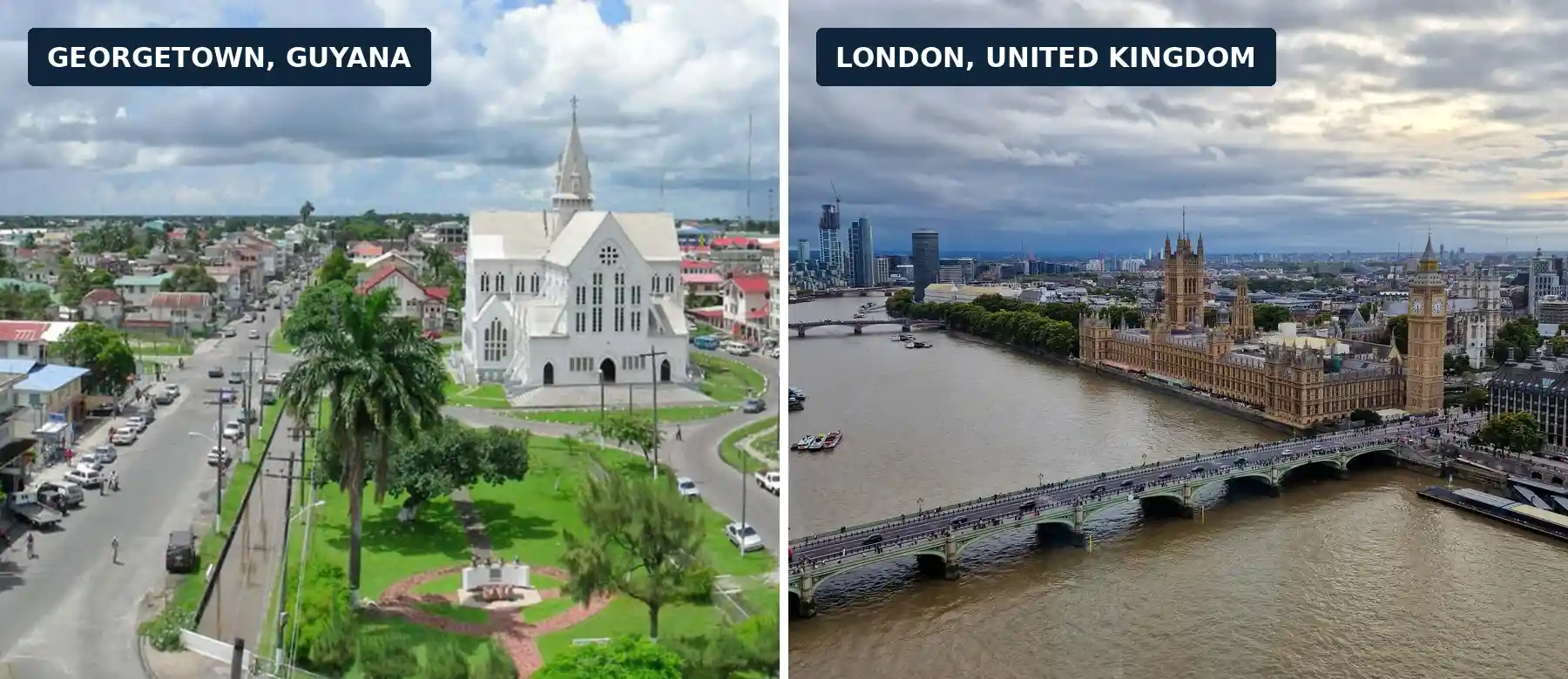
Commonwealth leaders reaffirmed their support for Guyana’s sovereignty and territorial integrity amid its longstanding border dispute with Venezuela.
They expressed concern over Venezuela’s stated intention to reject an eventual ruling by the International Court of Justice concerning the validity of the 1899 Arbitral Award, and called for the dispute to be resolved peacefully through the Court’s proceedings.
The communiqué also addressed security concerns along the Guyana-Venezuela border and urged action to prevent further incidents.
Belize received renewed support concerning its territorial dispute with Guatemala, with leaders endorsing the ongoing International Court of Justice process and calling for respect for existing confidence-building measures.
For the Caribbean, these declarations carry significance beyond the countries directly involved. They reinforce the importance of international law and peaceful dispute resolution for smaller states that may lack the political or military influence of larger powers.
A Wider Agenda for Commonwealth Cooperation
The meeting addressed democratic governance, human rights, public health and institutional reform.
Leaders expressed support for stronger democratic institutions, anti-corruption measures and greater protection for civil society, journalists and fundamental freedoms.
Healthcare cooperation received attention, including commitments to strengthen health systems and improve access to essential services.
The summit also acknowledged the ongoing discussion surrounding reparatory justice for the transatlantic trafficking and enslavement of Africans, welcoming the United Kingdom’s agreement to participate in structured dialogue with affected parties.
Although these issues form part of the Commonwealth’s wider agenda, the central emphasis of this year’s gathering remained on strengthening partnerships and creating practical opportunities for development.
From Commitments to Results
The Commonwealth represents 56 countries and approximately 2.7 billion people, bringing together nations with vastly different economic circumstances, political systems and development priorities.
Its diversity offers opportunities for cooperation, but also presents challenges in ensuring that the interests of smaller and more vulnerable members receive meaningful attention.
For Antigua and Barbuda, hosting the summit has provided an opportunity to demonstrate the diplomatic role that Caribbean nations can play in international affairs.
For the wider region, the discussions have raised important possibilities involving trade, climate financing, education, technology and economic diversification.
The success of the meeting will ultimately depend on what happens after leaders return home.
The investment opportunities discussed must attract actual financing. Trade initiatives must make it easier for businesses to reach new markets. Climate commitments must translate into accessible support for countries already confronting the effects of environmental change.
The Commonwealth’s latest gathering has outlined an ambitious direction for cooperation, but its lasting significance will be measured less by the declarations made in Antigua and Barbuda than by the opportunities and improvements that follow.
For Caribbean countries seeking stronger economic prospects and greater resilience, that distinction will matter most.