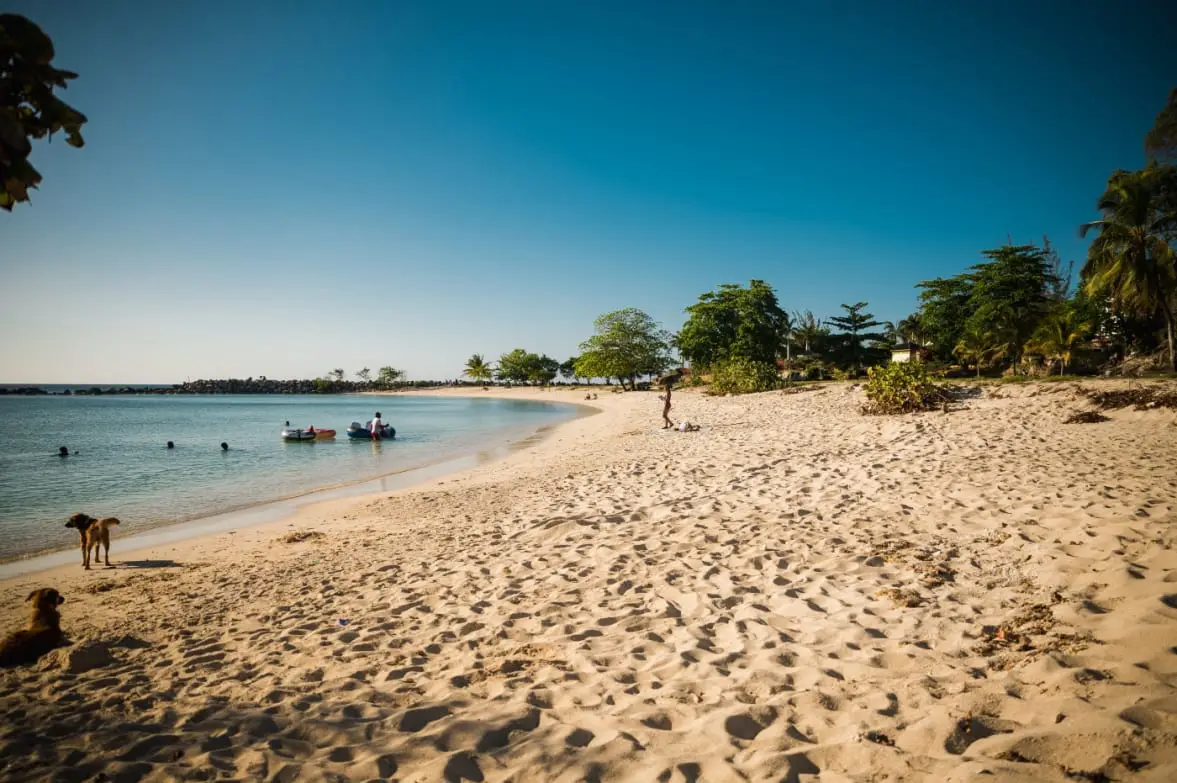
Jamaica’s beaches have always been places where families gather, communities celebrate and people find respite from everyday life. Lately, across the island, questions surrounding who can access the coastline, and under what conditions, have become the subject of an increasingly public debate on Jamaica public beach access.
A recent court ruling concerning Little Dunn’s River in Ocho Rios, St Ann, has brought renewed attention to the issue.
On October 1, the St Ann’s Bay Parish Court granted an interim injunction preventing the Urban Development Corporation (UDC) from restricting public access to the popular beach, river and waterfalls while a longstanding legal challenge remains before the courts.
The case was brought by the Jamaica Beach Birthright Environmental Movement (JABBEM), alongside residents and business operators who argue that the public has enjoyed access to the area for decades and should be permitted to continue doing so.
Also Read: Could the Caribbean Become a Global Leader in Sustainable Development?
The group is seeking recognition of customary access rights, including the use of the area for recreation, fishing and certain commercial activities.
The UDC, which owns and manages the property, has taken a different position. While acknowledging the importance of public access, the agency maintains that managing the site requires appropriate arrangements for safety, security, sanitation and maintenance.
In a statement issued on October 2, the corporation confirmed that it would comply with the court’s order and facilitate access seven days a week. However, it cautioned that regular management services, including lifeguards and other amenities, would not necessarily be available throughout the week.
The UDC has also indicated that it intends to challenge the interim ruling through the courts.
A Debate Beyond Little Dunn’s River: Jamaica Public Beach Access Rights
The dispute has become part of a broader national conversation about Jamaica’s coastline, particularly as tourism and property development continue to shape access to some of the island’s most desirable coastal areas.
At the centre of the debate is the Beach Control Act of 1956, which regulates the use of Jamaica’s foreshore and seabed.
Campaigners argue that the existing legal framework has contributed to restrictions that prevent ordinary Jamaicans from freely enjoying beaches that have historically formed part of community life.
The government, however, maintains that coastal management must also consider public safety, environmental protection and the economic importance of tourism.
Environment Minister Matthew Samuda has defended managed access arrangements, pointing to security concerns and the need to protect tourism-related employment and investment.
Campaigners contend that public access and a successful tourism industry need not be competing interests. They argue that hotels, resorts and other coastal developments should be able to operate without excluding local communities from the shoreline.
The debate also raises wider questions about affordability, particularly where entrance fees or restrictions make recreational spaces difficult for some families to enjoy.
For an island whose beaches are celebrated internationally, the question of whether its own citizens can enjoy those same spaces remains deeply significant.
The Little Dunn’s River case is expected to return to court on November 30. Until a final determination is made, the interim order preserves public access but does not settle the wider legal questions.
Its outcome could have implications beyond St Ann, as communities, campaigners and policymakers continue to examine how Jamaica can balance economic development with the public’s relationship to its coastlines and beaches.